A sales pipeline with follow-ups that don’t get forgotten

A consulting sale is rarely lost in the first meeting but in the silence afterwards. Seven practices to give every opportunity its next step, and how they look in Iurefficient’s CRM.
In a consulting firm a sale is rarely lost in the first meeting. It is lost in the silence that follows: the proposal nobody picked up again, the call that slipped a week and then another, the contact who changed jobs. The pipeline does not fail for lack of prospects but because follow-ups depend on the memory of a busy person. These practices are simple and work with any tool; at the end we show how they look in Iurefficient.
1. Define stages by what the client did, not by how you feel
“Very interested” is not a stage. “Accepted a discovery meeting,” “received the proposal” or “asked for scope changes” are, because anyone can verify them. Five or six stages are enough; more than that and nobody keeps them up to date.
2. Every open opportunity has a next action with a date
This is the rule that pays off most. If an open opportunity has no scheduled next step, it is effectively abandoned. Once a week, review the pipeline looking for exactly that.
3. Plan a cadence, not a loose reminder
What gets dropped is not the first contact, it is the fourth. Set a reasonable sequence in advance, for example an email on day 0, a call on day 3, another email on day 7 and, on day 14, a decision on whether to archive. Having the sequence from day one keeps you from depending on Monday’s mood.
4. Stop the cadence when the client replies or the deal closes
Pushing someone who already answered is impolite; chasing someone who already bought, or already said no, is worse. A good cadence switches itself off on a reply or on closing, and respects anyone who asked not to receive more emails.
5. Record why deals are lost
“Lost” with no reason teaches nothing. A short list of reasons (price, timing, chose someone else, project cancelled, no response), required at closing, lets you answer with data after a few months why deals are lost and at which stage. It also helps to know how long each opportunity spends in each stage: the one that has taken twice as long as the rest needs attention.
6. Weight, but keep currencies apart and don’t trust a single figure
The weighted value (amount times stage probability) is good for spotting trends, not for promising revenue. If you sell in more than one currency, do not add them into one total. And review overdue close dates: an opportunity with a past date is not “almost closed,” it is data someone has to fix.
7. Handle what arrives on its own first
Whoever fills in the form on your website raised their hand today; tomorrow they may have gone elsewhere. Keep those inbound prospects apart from the rest of the list and handle them before what can wait.
How it looks in Iurefficient
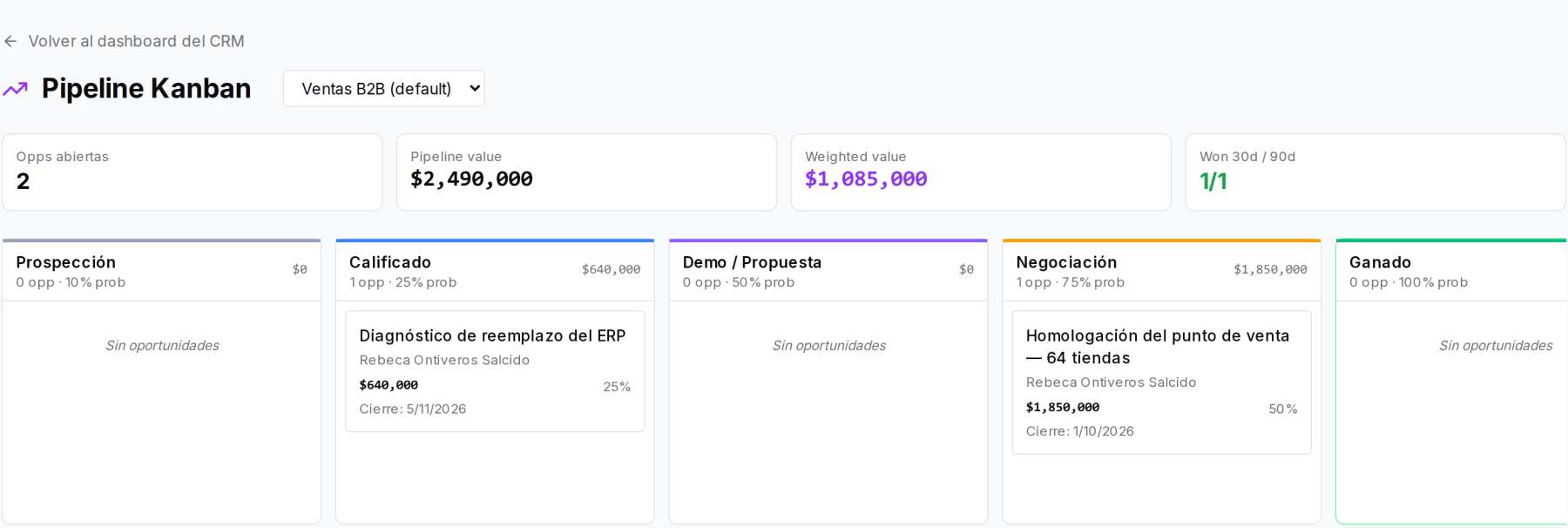
Iurefficient’s CRM organizes opportunities on a board by stage, with the value and weighted value of each column, and each opportunity’s page lets you move it to the next stage or mark it won or lost.
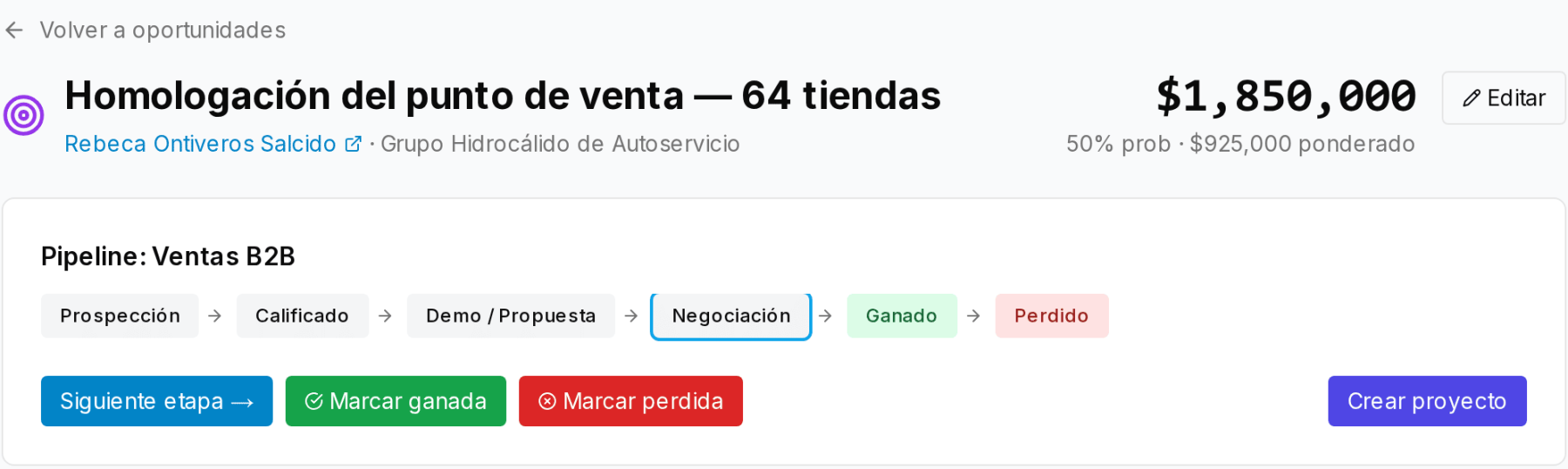
- Marking an opportunity as lost requires choosing a reason from a catalog, and the system keeps how long it spent in each stage.
- Follow-up cadences create regular activities in the salesperson’s agenda, and stop on their own when the prospect replies or the opportunity is won or lost.
- The “Daily summary” when you open the chat includes each person’s sales work: their opportunities and their pending or overdue follow-ups.
- Prospects arriving through the web form show up in an inbox at the top of the CRM board until they are qualified, discarded or given an opportunity.
¿Quieres ver Iurefficient en acción?
Agenda una demostración o empieza tu prueba gratuita hoy mismo.
Solicitar demo